Presuming Competence: What Other Autism Homeschool Programs Miss
I want to talk about what presuming competence means for us, and how we integrate that into Dare to Homeschool Your Speller.
Because presuming competence is not just a nice idea. It changes the way we teach.
I’ve looked at several of the popular homeschool options for autistic nonspeakers, and from what I have seen, unfortunately, many do not truly presume competence. They might say they do, but when you peel back the layers, what you actually find is special education goals being sold as age-appropriate learning.
A student who is new to homeschooling or new to spelling does not necessarily need to start at kindergarten level.
And that is where Dare to Homeschool is different.
At Dare to Homeschool Your Speller, age-appropriate learning means just that: learning the same type of content a typical learner would be offered around that age.
My son, Zeke, was 9 when he began spelling, and we jumped from kindergarten/1st grade level work to 4th grade level work almost overnight.
Was it perfect? No.
But was he able to do it? Yes.
In those early days, we focused heavily on INPUT.
That meant 4th grade math videos, 4th grade language arts videos, read-aloud novels, science, history, and content that was actually engaging and challenging. But it took a lot of planning, patchwork, and adapting to make this work for him. There was so much trial and error—and plenty of wasted curriculum—as we found our feet.
He could not read aloud.
He could not say an answer.
He could not write an answer.
But we could still give him access to rich, age-appropriate learning because we focused on input, not output.
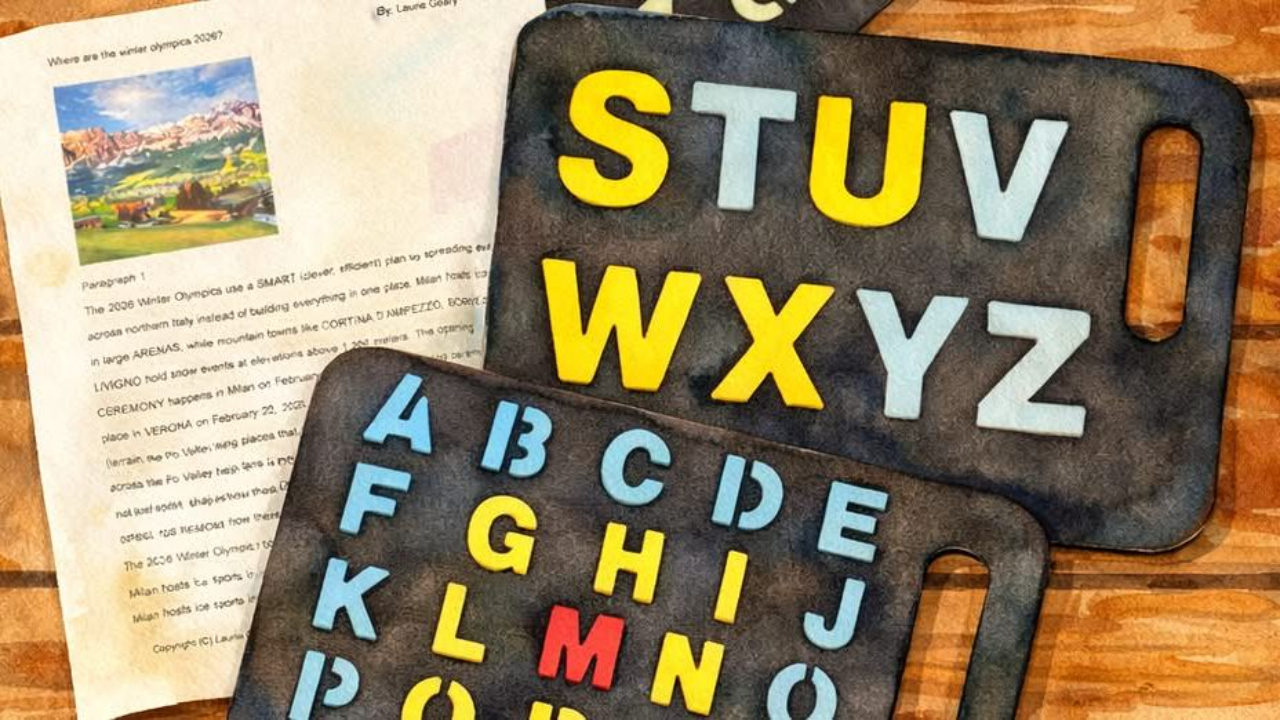
For output, we practiced spelling through spell lessons. Then, over time, we began using the spell boards for math, reading comprehension, and other academic work too.
And now, almost 3 years later, even though Zeke is not open on the boards, he is learning at a 6th grade level.
He does a traditional math program in addition to Math Step 3. He is learning about American history and listening to books like The Peacemaker and Johnny Tremain. He is learning about engineering and physics. In Step 3 Language Arts, he is learning about Latin and Greek roots, grammar, literary analysis, and more.
He is thriving. He is soaking up knowledge. He is building his regulation and communication skills as he goes.
Even though he is not open on the board, this program is giving him access to a real education that is challenging and fun.
And this is what so many people miss: skills like reading comprehension and vocabulary are not difficult for many of our spellers. Math concepts are not difficult for many of our spellers. They have been listening and absorbing everything for years.
They want to be challenged.
They want to grow in their knowledge.
What they have often lacked is not understanding.
They have lacked access.
Giving our students the chance to engage with meaningful, challenging academics is just the beginning of opening up the world to them.
And this is exactly what I want our families to feel equipped to do inside Dare to Homeschool Your Speller.
Whether your speller is 6 or 13, they deserve access to learning that matches the maturity of their mind—not just the current ease of their output.
So many families tell us that their students are actually more regulated when they are given highly cognitive, interesting content. That matters.
Our learners do not have to be limited to adapted special education materials. Those materials may have a place, but they are not the only option.
Adapted academics can be helpful when they remove barriers. I am not against supports, visuals, scaffolding, or thoughtful accommodations.
But adapted academics become a problem when they replace real age-appropriate academics.
If the content is always simplified, always below age level, always focused on basic skills, and never moves toward the kind of history, science, literature, math, and language arts a student’s peers are learning, then we have not truly presumed competence. We have simply made the work easier to access while keeping the ceiling too low.
Another major difference is that spell lessons are built into the program.
They are not an afterthought. They are not something you have to figure out on your own. Each subject includes a spell lesson every week.
So if your family is using math, language arts, history, and science, you will have 4 spell lessons each week to choose from.
And this matters because spell lessons lead to open spelling. They are the onramp.
By pairing real academic content with intentional spelling practice, we have created something powerful: a way for students to build communication skills while also receiving a rich, meaningful education.
Every lesson in Dare to Homeschool Your Speller is designed with spellers in mind. The lessons are cognitively rich, interesting, engaging, and accessible for students who spell to communicate.
Our math and language arts curricula are truly unique because they provide an onramp into age-appropriate academics without starting back at the beginning.
For example, if a student starts in Step 3 of our math program, they will receive an overview of concepts like fractions, multiplication, decimals, and more—in a way that allows them to engage with the content, even if they have not been formally taught math before.
Because I guarantee you: given the opportunity and access, so many of our spellers can add, subtract, multiply, divide, and more in their heads already, even without formal instruction.
Every speller deserves a quality, challenging education—no matter their acquisition stage on the boards.